
- Share
- Tweet
Micro, Small and Medium Enterprises (MSMEs) account for 96 per cent of businesses in Nigeria, contribute 48 per cent to the country’s Gross Domestic Product (GDP) and provide 87 per cent of employment, according to the Minister of State for Industry, Senator John Owan-Enoh.
Owan-Enoh disclosed this on Sunday in Calabar during a town hall meeting with business operators organised by the Directorate of Manufacturing and MSME of the All Progressives Congress (APC) Presidential Campaign Council
He described MSMEs as the backbone of Nigeria’s economy, noting their significant contributions to productivity, employment and economic growth
“If you look at the MSME ecosystem and appreciate the fact that about 96 per cent of businesses in our country are MSMEs, contributing about 48 per cent to our GDP and 87 per cent to employment, then you begin to wonder what else is left,” he said
“MSMEs are actually our economy. You all who are seated here are actually the economy of Cross River and Nigeria,” he added
The minister noted that the town hall meeting marked the first public outing of the Directorate of Manufacturing and MSME ahead of the APC presidential campaign rally in Cross River State
Owan-Enoh commended the Cross River State Government, led by Governor Bassey Otu, for reviving the Micro-Enterprise Development Agency (MEDA), describing the initiative as an important step towards supporting small businesses
He said the state government was also collaborating with federal agencies, including the Small and Medium Enterprises Development Agency of Nigeria (SMEDAN), Bank of Industry (BOI) and Nigerian Export-Import Bank (NEXIM), to strengthen business support systems
The minister listed federal government interventions in the state, including an automotive training centre at the University of Cross River, a Compressed Natural Gas (CNG) conversion workshop and a 65-kilowatt solar-powered electric vehicle charging station at the University of Calabar
He also disclosed that a Memorandum of Understanding (MoU) had been reached with a South Korean team towards electric vehicle manufacturing in the state
The Federal Government has introduced several initiatives aimed at supporting small businesses, expanding local manufacturing and promoting value addition across Nigeria’s agricultural sector
The Nigerian Industrialisation Policy, introduced in January 2026, outlines six pillars, including MSME-to-industry transition, value-chain development and import substitution. The policy targets increasing manufacturing’s contribution to GDP to between 20 and 25 per cent by 2030
In October 2026, the Bureau of Public Procurement launched a free online training platform to help Nigerian MSMEs understand government procurement procedures and improve their access to public contracts
Meanwhile, the Bank of Industry unveiled an €85 million financing facility in July 2026 to expand Nigeria’s cocoa processing industry, strengthen local value addition and reduce dependence on raw cocoa exports
Don’t Miss
Ogun $1.8bn Industrial Park to Create 2,500 Jobs, Boost Business Opportunities

Business4 years agoBREAKING: CBN announces New Withdrawal Policies, Pegs ATM Withdrawals Limit at N20,000 daily, N100,000 weekly

Business6 years agoFirst Bank Nigeria Joins SME Finance Forum
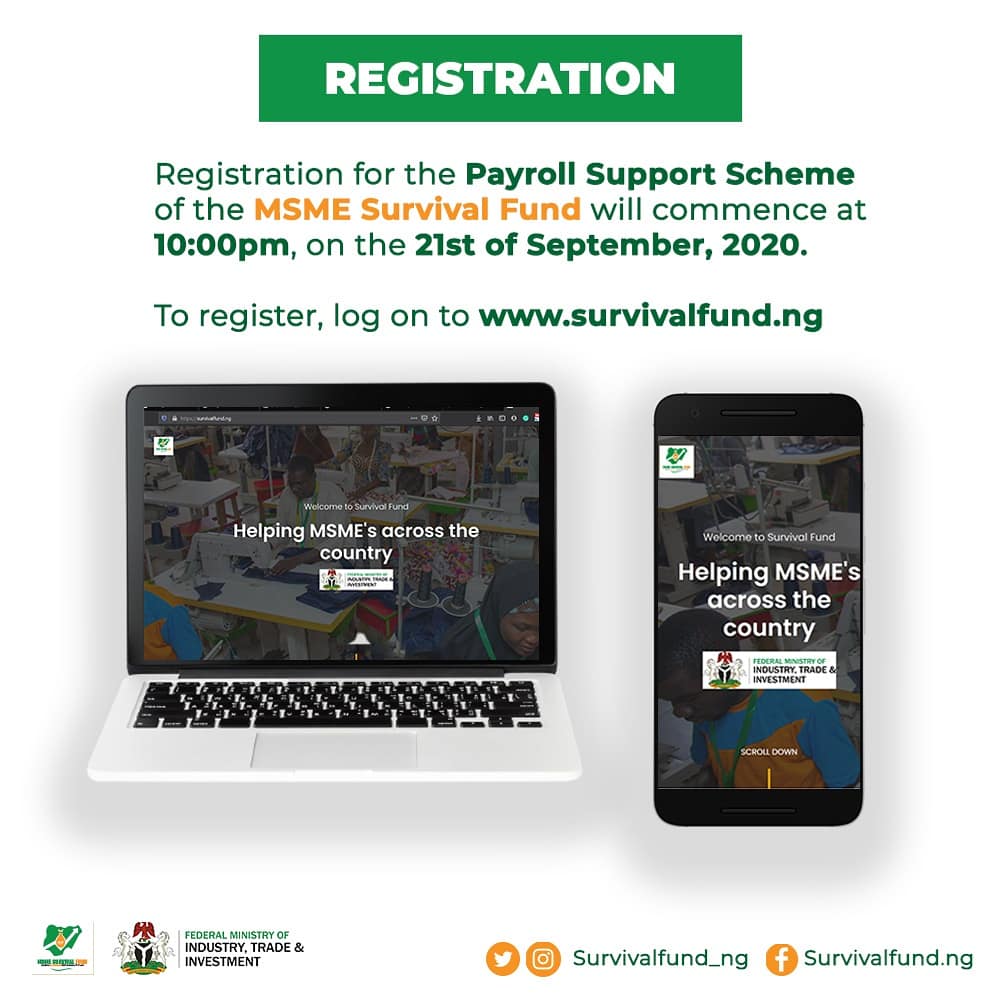
Business6 years agoFG Opens Application Portal for N75 Billion MSME Survival Fund 10pm Today, Releases Time-table for Payroll Support Scheme for different sectors
- <img src="https://usglobalxpress.com/wp-content/uploads/2026/11/mtn-ict-training-6.jpg" alt="Call for <a href="https://usglobalxpress.com/call-for-applications-fund-for-innovation-in-development-offers-grants-of/” title=”Call for Applications: Fund for Innovation in Development Offers Grants of”>Applications: MTN ICT and Business Skills Training (N90 Million Grant for 300 Participants)”>
Business3 years agoCall for Applications: MTN ICT and Business Skills Training (N90 Million Grant for 300 Participants)

Business5 years agoSendbox raises $1.8 million in seed funding to digitize deliveries for African SMEs

Business6 years agoHow to apply and benefit from free CAC Business Name Registration for 250,000 MSMEs
- Business4 years ago
Call for Applications: Rural Youth Skill Acquisition Programme for Nigerian Youths (receive N50,000 monthly stipend)

Articles & Resources6 years agoHow to put your house in order for tax purposes